
Denso RC8A industrial robot


 Kaiserslautern

If you decide to buy equipment at a low price, make sure that you communicate with the real seller. Find out as much information about the owner of the equipment as possible. One way of cheating is to represent yourself as a real company. In case of suspicion, inform us about this for additional control, through the feedback form.
Before you decide to make a purchase, carefully review several sales offers to understand the average cost of your chosen equipment. If the price of the offer you like is much lower than similar offers, think about it. A significant price difference may indicate hidden defects or an attempt by the seller to commit fraudulent acts.
Do not buy products which price is too different from the average price for similar equipment.
Do not give consent to dubious pledges and prepaid goods. In case of doubt, do not be afraid to clarify details, ask for additional photographs and documents for equipment, check the authenticity of documents, ask questions.
The most common type of fraud. Unfair sellers may request a certain amount of advance payment to “book” your right to purchase equipment. Thus, fraudsters can collect a large amount and disappear, no longer get in touch.
- Transfer of prepayment to the card
- Do not make an advance payment without paperwork confirming the process of transferring money, if during the communication the seller is in doubt.
- Transfer to the “Trustee” account
- Such a request should be alarming, most likely you are communicating with a fraudster.
- Transfer to a company account with a similar name
- Be careful, fraudsters may disguise themselves as well-known companies, making minor changes to the name. Do not transfer funds if the company name is in doubt.
- Substitution of own details in the invoice of a real company
- Before making a transfer, make sure that the specified details are correct, and whether they relate to the specified company.
Seller's contacts

 +49 162 58...
Show
+49 162 5858448
+49 162 58...
Show
+49 162 5858448


 Germany, Kaiserslautern


 Germany, Kaiserslautern


 6 kg
Germany, Kaiserslautern
6 kg
Germany, Kaiserslautern


 4 kg
Germany, Kaiserslautern
4 kg
Germany, Kaiserslautern


 8 kg
Germany, Kaiserslautern
8 kg
Germany, Kaiserslautern


 10 kg
Germany, Kaiserslautern
10 kg
Germany, Kaiserslautern


 35 kg
Germany, Kaiserslautern
35 kg
Germany, Kaiserslautern
 6 kg
Germany, Kaiserslautern
6 kg
Germany, Kaiserslautern


 Germany, Kaiserslautern


 165 kg
Germany, Kaiserslautern
165 kg
Germany, Kaiserslautern
 16 kg
Germany, Kaiserslautern
16 kg
Germany, Kaiserslautern


 Germany, Kaiserslautern


Location: IT
Variables memory: 1.75 MB (approx. 65000 points)
Program memory: 400 MB
Temperature: 0–40 °C
Humidity: ≤ 90% RH
Standard RC8A: 357 × 320 × 94 mm
RC8A with Safety Motion: 411 × 320 × 94 mm
Volume: 12.4 liters
Power cable: 5 m
I/O cable: 8 m (optional)
Quantity: 1 unit (for both robots)
Cable length: 4 m (optional 8 m / 12 m)
Resolution: 640 × 480 pixels
Power supply: 24 V
Protection class: IP65 (dust & splash resistant)
Dimensions: 290 × 198 × 80 mm
Type: SCARA
Maximum reach: 550 mm
Z-axis stroke: 320 mm
Repeatability (J1 + J2): ±0.012 mm
Repeatability (Z-axis): ±0.01 mm
Repeatability (T-axis): ±0.004°
Payload capacity (wrist): 8 kg
Maximum composite speed: 8780 mm/sec
Z-axis speed: 2760 mm/sec
T-axis speed: 220°/sec
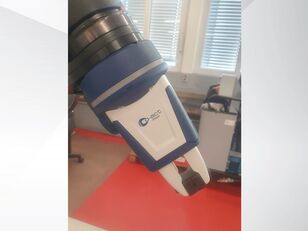
Functional Description: The robotic cell was originally designed to feed a cutlery packaging machine. The system picked stacked forks from dedicated crates and transferred them onto a packaging conveyor at a loading speed of 100 pieces per minute. While the two SCARA robots were operating correctly, the crate exchange system (empty vs. full crates) was not optimally designed. For this reason, the robotic cell was eventually decommissioned. A short video of the robot in operation is available
Motion & Control
Point-to-point control system
Linear and circular movement in 3 dimensions
Memory Capacity
Up to 256 programs
5000 instructions per program
I/O Signals
Inputs
8 user inputs at robot wrist (Hand I/O)
8 user inputs at controller (Mini I/O)
8 system inputs
Outputs
8 user outputs at robot wrist (Hand I/O)
7 user outputs at controller (Mini I/O)
8 system outputs
Communication Interfaces
1 × RS-232C
Gigabit Ethernet
2 × USB
Additional Features
Self-diagnostic functions
Operating conditions
Controller Dimensions & Weight
Cables
Teaching Pendant
Display
7.5" TFT LCD touchscreen
Weight: approx. 1 kg
Functions
Program creation and editing
Parameter configuration
Robot jogging and motion control
Program start
Teaching and verification mode
I/O management
Communication setup
Error display
Robots
Quantity: 2 units
Mechanical Characteristics
Speed
Robot Arm Connections
Pneumatic connections
4 air tubes
Ø 6 mm
Electrical signals
24 signals via connector
Robot Features
Offline programming software
Absolute encoders
Sealed AC servo motors
brushless and maintenance-free
Power supply: Single-phase or three-phase 230 V
Additional Equipment
2 gripping devices with sensors for detecting picked quantity
1 electrical control cabinet interfacing the entire system
Machine History